
Bacteriostatic Water vs Sterile Water — What’s Actually Different and Why It Matters
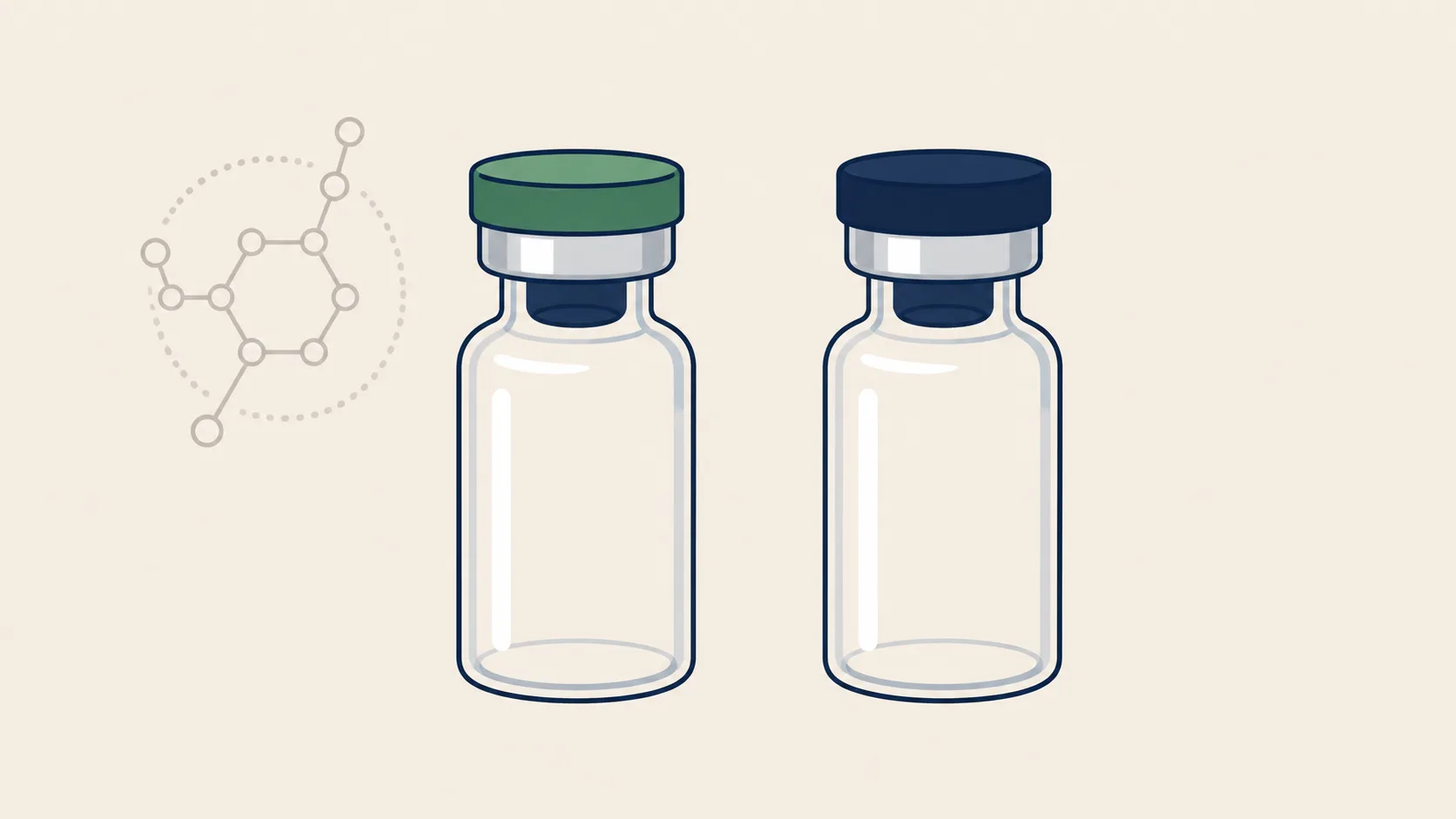
Two clear liquids in nearly identical vials, and it’s genuinely easy to grab the wrong one if you’re not paying attention to the label. The bacteriostatic water vs sterile water distinction isn’t about purity level — both are sterile — it’s about what happens after the vial is opened.
What Actually Differs Between Them
Sterile water contains nothing but water, sterilized to remove microorganisms at the time of packaging. That sterility is a snapshot, not an ongoing property. The moment a sterile water vial is punctured and used, it starts a clock — because there’s nothing in the solution actively preventing bacterial growth if it’s used again later.
Bacteriostatic water is sterile water with a small amount of benzyl alcohol added as a preservative — most commonly 0.9% (9 mg/mL), though a 1.1% (11 mg/mL) concentration is also manufactured under the same USP standard. That benzyl alcohol doesn’t sterilize anything new; its job is to inhibit bacterial growth in solution after the vial has already been opened. That’s the entire functional difference: bacteriostatic water is designed for multi-use vials that get punctured repeatedly over days or weeks, while sterile water is intended for single-use.
Why the Choice Matters for Reconstitution
This is exactly why reconstitution protocols specify bacteriostatic water rather than plain sterile water. A reconstituted peptide vial isn’t used once and discarded — it’s drawn from repeatedly over the vial’s storage life, and each puncture is a potential entry point for contamination. The benzyl alcohol content is what makes repeated access across that storage window meaningfully safer than it would be with plain sterile water.
The trade-off is that benzyl alcohol isn’t inert. According to the FDA-published prescribing information for Bacteriostatic Water for Injection, USP, the solution carries a labeled warning against use in neonates due to benzyl alcohol toxicity in that specific population, and it’s also not intended for administration as a plain IV fluid without an added solute. Those are separate, protocol-specific considerations outside the scope of a reconstitution calculation itself — but worth knowing they exist, and worth reading the actual manufacturer labeling rather than a forum post if that ever applies to your situation.
Source: Bacteriostatic Water for Injection, USP — DailyMed (U.S. National Library of Medicine)
Neither type of water changes the underlying reconstitution math. Concentration is still peptide amount divided by water volume regardless of which water type is used. The distinction matters for handling and storage practice, not for the arithmetic itself.
Bacteriostatic Water vs Sterile Water, at a Glance
- Contains a preservative: Bacteriostatic water — yes (benzyl alcohol, 0.9% or 1.1%). Sterile water — no.
- Intended use: Bacteriostatic water — multi-dose vials, repeated withdrawals over time. Sterile water — single-use only.
- Effect on reconstitution math: Identical — concentration is peptide amount ÷ water volume either way.
- Key restriction: Not labeled for use in neonates, and not for plain IV administration without a solute, per USP labeling.
Once you know how much water you’re adding, our peptide calculator handles the resulting concentration and dosing math automatically, regardless of which water type is behind that number.
Precise measurement matters everywhere on this site, not just here — see how the same care applies to exact date and age math →
Peptide Calculator
Run the actual numbers free, no signup required.
Related questions
Can I use tap water instead of bacteriostatic water to reconstitute a peptide?
No — tap water isn’t sterile and contains no preservative, which risks contamination and shortens usable stability dramatically. Bacteriostatic or sterile water, specifically labeled for reconstitution, is the standard for a reason.
How long does a reconstituted peptide stay stable once mixed?
It depends heavily on the specific compound and storage conditions, but many reconstituted peptides are considered stable for a period of weeks when refrigerated — always check the vial-specific guidance rather than assuming a universal timeframe.
What does a Certificate of Analysis (COA) actually verify?
A COA is a lab document confirming a specific batch’s actual purity and identity as tested — it’s evidence of what’s in a given vial, not a guarantee about any other batch, which is why matching the COA to the specific lot number matters.
Is there more than one strength of bacteriostatic water?
Yes — USP-labeled bacteriostatic water is manufactured at either 0.9% or 1.1% benzyl alcohol. Both are the same underlying preparation; check the specific vial’s label rather than assuming one concentration.