
Why Do Different Gematria Systems Give Different Numbers for the Same Word?
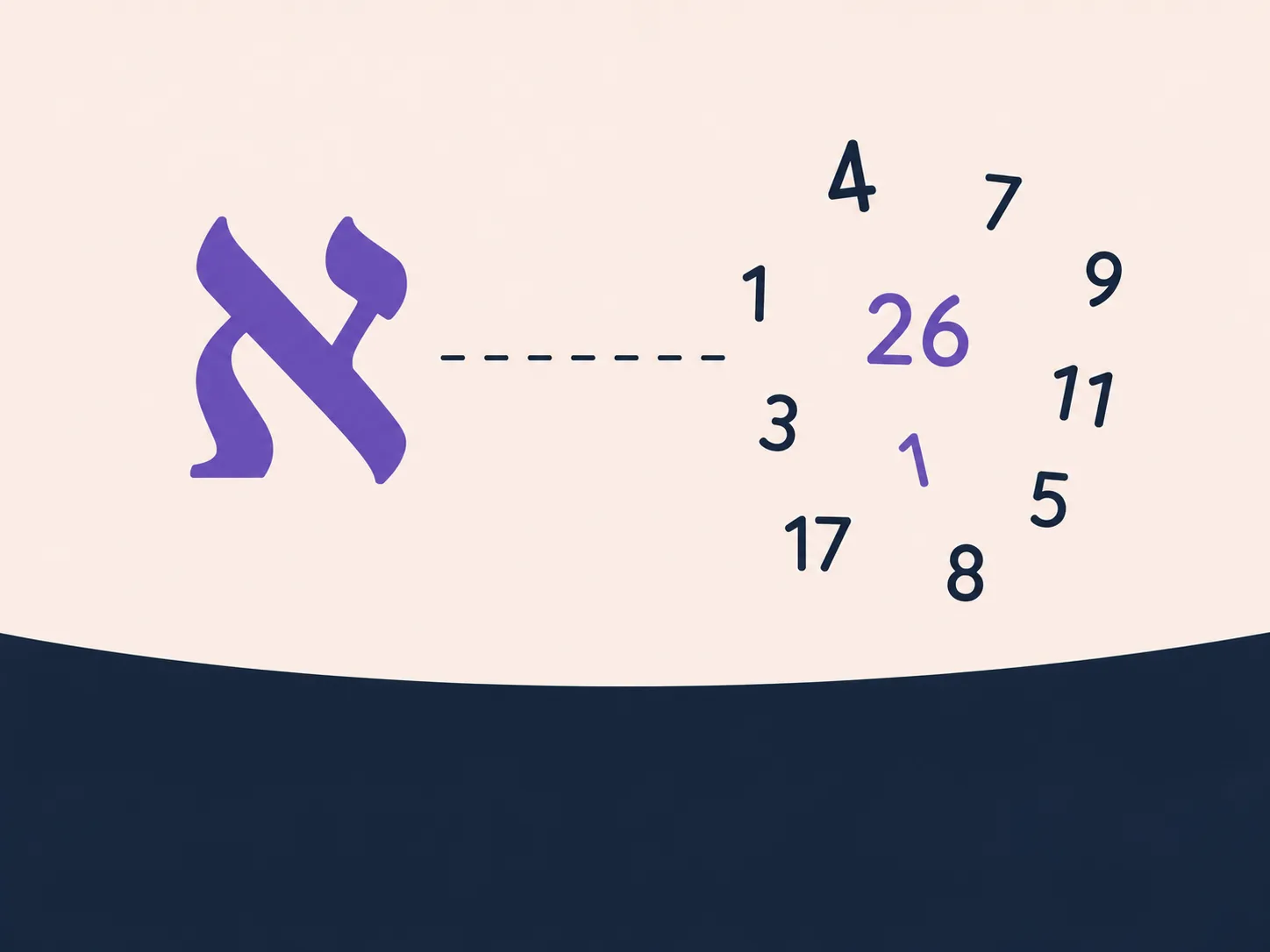
Why gematria systems give different numbers for the exact same word comes down to one thing: they aren’t measuring the same thing. If you’ve ever run the same word through more than one gematria system, you’ve probably had this moment: the number changes completely, and it’s not obvious why. Type “grace” into an English Simple calculation and you get one total. Switch to Chaldean and the total isn’t just different — it isn’t even in the same neighborhood. Nothing was miscalculated. The systems are answering different questions.
Why Gematria Systems Give Different Numbers: Four to Know
English Simple is the most literal one. A is 1, B is 2, and so on up to Z at 26. It’s alphabetical order turned into arithmetic, which makes it easy to follow but also means it inherited something arbitrary: the Latin alphabet’s order has no deeper meaning behind it. It’s just the sequence we settled on.
Chaldean numerology comes from a completely different place. It doesn’t follow alphabetical order at all — letters are grouped 1 through 8 based on a much older idea about vibration and sound, tracing back to Babylonian number theory, with 9 deliberately left out because it was considered sacred rather than assigned. That’s why a word’s Chaldean total can look nothing like its English Simple total.
Hebrew Standard gematria is the original — everything else is downstream of it. Aleph through Tav map to real historical values (1 through 400), and this is the actual system Talmudic scholars used centuries ago to find numeric echoes between verses. English gematria borrowed the method but applied it to an alphabet that was never part of that tradition.
Source: Encyclopaedia Britannica — Gematria
Pythagorean systems reduce everything to a single digit, cycling 1 through 9 repeatedly across the alphabet, which is why they produce smaller, more repetitive totals than English Simple.
Is One System “Correct”?
None of these systems is more “correct” — they’re different interpretive lenses, each with its own history. The interesting part isn’t which one is right, it’s that a word can carry several completely different numeric identities depending on which tradition you’re asking. Understanding why gematria systems give different numbers in the first place is really the whole answer here: each one was built to encode something different — alphabet order, vibration, historical letter-value, or digit reduction — so mismatched totals aren’t an error to fix, they’re the expected outcome of comparing four different tools.
If you want to see the spread yourself, running a word through all fourteen systems at once on our gematria tool makes the differences obvious in a way no single-system calculator can.
Numbers show up everywhere on this site, not just in letter-values — our Age and Life Calculators cluster →
Gematria Calculator
Run the actual numbers free, no signup required.
Related questions
Why do gematria systems give different numbers for names specifically?
Same reason as any other word — a name run through English Simple, Chaldean, Hebrew Standard, and Pythagorean will produce four different totals because each system assigns letter values by a different logic, not because names behave specially.
Is gematria a religious practice or just a linguistic curiosity?
Both, depending on who’s using it. Within Jewish scholarship it’s a genuine tool for Torah study; outside that context, plenty of people use the same arithmetic purely as a numerological curiosity with no religious framing attached.
Why do Kabbalists care about a word’s numerical value?
Kabbalistic tradition treats matching gematria values as evidence that two words or phrases share a deeper conceptual connection — the numbers are read as a layer of meaning embedded in the text itself, not just coincidence.
Is there a “correct” gematria system to use for serious study?
For traditional Torah study, Hebrew Standard (Mispar Hechrachi) is the historically dominant system. Outside that specific context, the right system depends entirely on which tradition or language you’re working with.