
Starbucks Nutrition
Iced vs Hot Starbucks Drinks: Does Temperature Change the Calorie Count?
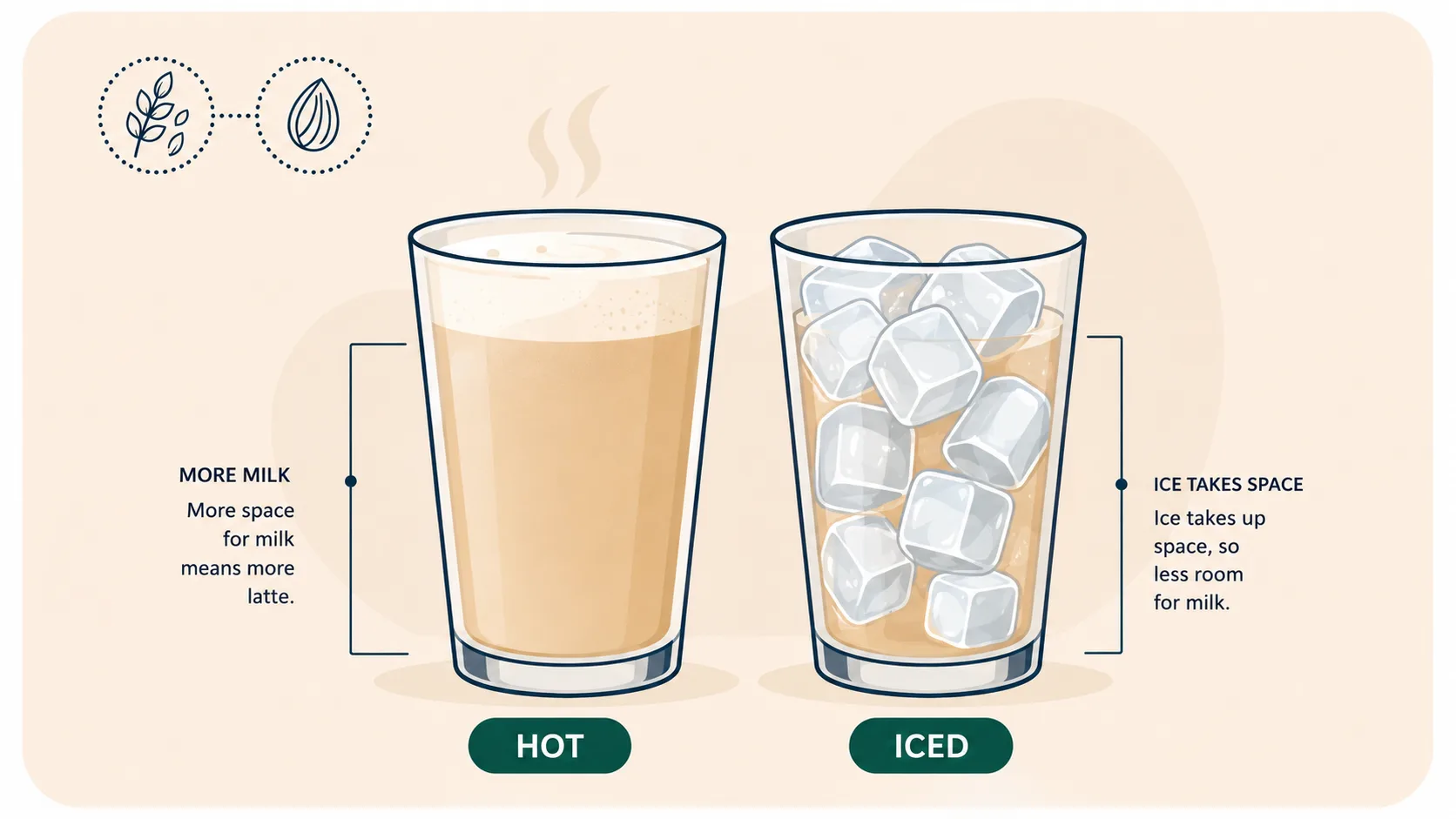
Comparing iced vs hot Starbucks calories usually comes down to one thing: an iced Grande latte commonly comes in lower calories than a hot Grande latte with the same milk — and it has nothing to do with temperature making a drink “lighter.” The real explanation is simpler and more mechanical: ice takes up physical space in a fixed-size cup, which means less room for milk.
Iced vs Hot Starbucks Calories: The Real Mechanism
A hot Grande cup holds 16 ounces of drink — nearly all of it liquid (espresso plus steamed milk). An iced Grande cup also holds 16 ounces total, but a meaningful portion of that volume is ice, not liquid. Less liquid volume means less milk, and less milk means fewer calories — the recipe ratio hasn’t changed, only how much of the cup ice is occupying.
This is consistently reported as a genuine, if modest, calorie difference — commonly cited in the range of several dozen calories for a Grande milk-based drink, though the exact number depends on the specific drink, milk type, and how much ice a given store uses. It’s a real effect, not a marketing illusion, but it’s also not large enough to be a meaningful “diet strategy” on its own.
Worth knowing if you’re comparing labels: under the FDA’s menu labeling requirements, chain restaurants with 20 or more locations — which covers Starbucks nationwide — are legally required to post calorie information for standard menu items. That’s the underlying reason every iced vs hot Starbucks calories comparison in this cluster is checkable, not estimated from scratch.
Where This Doesn’t Hold True
Two honest exceptions to the iced vs hot Starbucks calories rule matter here. Frappuccinos aren’t “iced” in this sense — they’re blended, meaning ice is crushed directly into the drink rather than sitting alongside it, so the displacement logic doesn’t apply the same way. And ordering habits often cancel out the savings — iced orders are more likely to pick up an extra pump of syrup, cold foam, or a sweet cream topping that a hot order of the “same” drink wouldn’t include, which can erase the ice-displacement advantage entirely.
The only reliable way to know your real iced vs hot Starbucks calories number is to check it directly — the Starbucks Nutrition Calculator lets you compare the same drink hot versus iced side by side, with your actual milk and syrup choices included.
Related in this cluster
How Starbucks Cup Sizes Actually Work → 4 min read Oat Milk vs Almond Milk vs 2% at Starbucks → 4 min read Starbucks Caffeine Content by Size: What the Cup Doesn’t Tell You → 4 min readAlso worth reading
Why Reconstitution Volume Changes Concentration, But Never Total Amount → the same displacement principle, applied in the Peptide Research clusterStarbucks Nutrition Calculator
Compare the same drink hot vs. iced and see the exact calorie difference.
Is an iced latte always lower calorie than a hot latte?
Usually, but not guaranteed. For iced vs hot Starbucks calories, the displacement effect from ice typically lowers the milk volume and therefore calories, but added syrup, cold foam, or sweet cream on an iced order can offset or exceed that savings.
Does this apply to Frappuccinos?
No — Frappuccinos are blended with crushed ice directly into the drink rather than served over ice, so the same cup-volume displacement logic doesn’t apply the same way.
Why do hot and iced Venti sizes hold different amounts?
A hot Venti holds 20 ounces while a cold Venti holds 24 ounces — the extra 4 ounces in the cold cup exists specifically to leave room for ice without spilling.
Is Starbucks legally required to post these calorie numbers?
Yes — under FDA menu labeling rules, chain restaurants with 20 or more locations must post calorie information for standard menu items, which is why these figures are checkable rather than estimated.
Does less ice mean more calories?
Yes, indirectly — requesting less ice leaves more room in the cup for actual liquid, which typically means slightly more milk and therefore slightly more calories than the standard-ice version.
Calorie-difference figures reflect commonly reported ranges cross-referenced against independent nutrition databases and are not exact for every store or recipe. Menu-labeling context reflects the FDA’s published menu labeling requirements. For a specific drink, confirm with Starbucks’ official nutrition information. This article is for general informational purposes and isn’t dietary or medical advice.